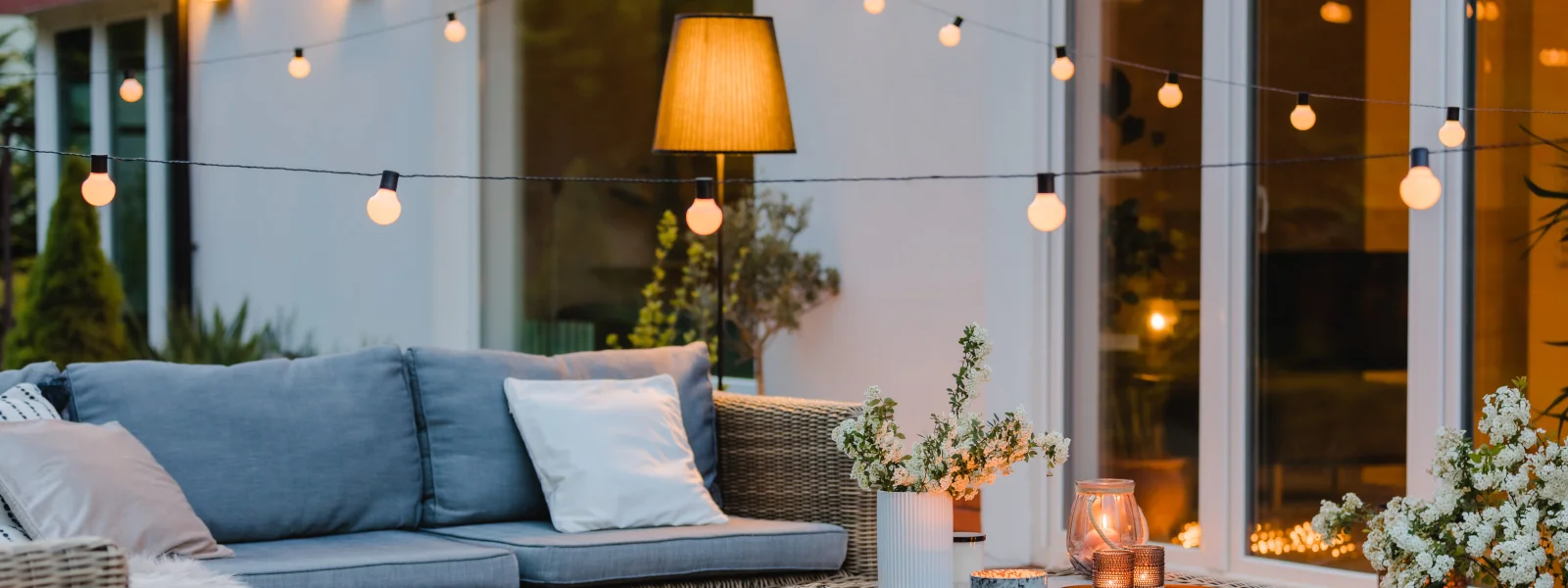
Outdoor lighting provides safety and assurance when moving around your property at night, boosts your security by warning off would-be intruders; and illuminates your landscape, showcasing it beautifully.
Shopping List
Floodlight | Security light | Lanterns | Bulkhead | Solar powered garden ornaments | Fairy lights
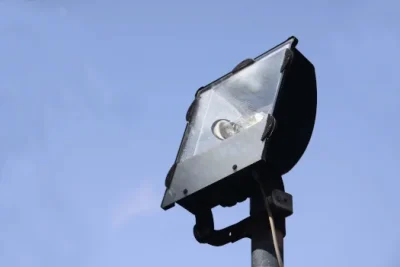 Floodlights
The strongest and brightest outdoor lighting option, floodlights are ideal for lighting up large areas well. Ideal for garden parties or working outside, they are a versatile lighting solution. There are many models available with different functions and features, such as motion sensors for instant reaction security lighting, LED bulbs for energy efficiency and fewer bulb replacements, and solar panels. They are also fitted with various types of mounting brackets and many offer adjustable angles to direct the light where you need it, ideal for outdoor uplighting. For lighting large areas well, mount floodlights high up on the nearest wall, pointing downwards. For decorative uplighting, floodlights work great from under trees or along the edge of a driveway pointed up towards the house. Just make sure the light isn’t going to keep you awake in your bedroom at night, make it difficult to drive by, or shine in your eyes as you walk into your house.
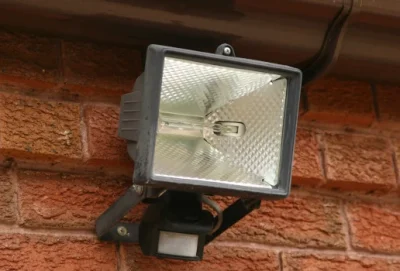 Security Lights
Built-in sensors detect motion and immediately turn the light on, both notifying you that motion was detected, and scaring away potential intruders by blowing their cover of darkness. They are available in all sizes and levels of brightness to suit any area. Features include: heavy duty covers, extra-long lasting bulbs, high distance infrared motion detectors, adjustable angle mounting brackets, and excellent energy efficiency. Burglars look for homes with little to no lighting, so even seeing this type of light mounted to your property will act as a deterrent.
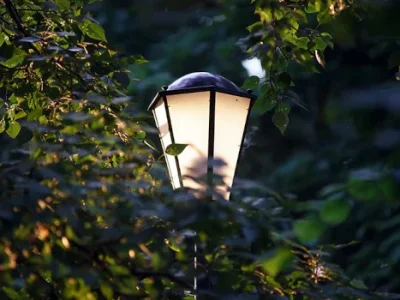 Lanterns
Lanterns combine form and function as a decorative form of lighting. They are the ideal choice for highly visible areas, such as alongside your front door, on the pillars of a gate, or even freestanding on their own poles. They’re also perfect for patios to add charm and comfort for enjoying the long summer evenings. Some lanterns even feature solar panels and movement detectors.
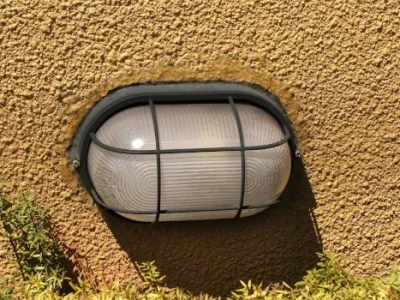 Bulkheads
Bulkhead lights are a robust, heavy duty, exterior lighting solution. Often caged and always designed to withstand the elements, a bulkhead light has an industrial look to it. They are a suitable choice for use in areas where other types of lights might be more easily broken, e.g. where sports are played or work is carried out. They are also more affordable than alternative outdoor lights. These wall mounted lamps don’t protrude out as much as other options, making them ideal for areas with limited space.
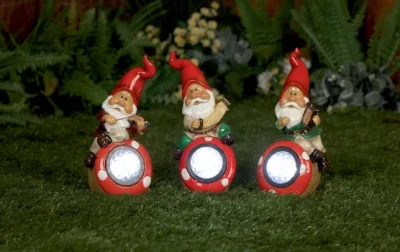 Small Garden Accessories
There is now a wide selection of solar powered garden ornaments that will light up your pathways at night. Providing just enough of a subtle glow to help you find your way, these multi-functional garden accessories range from garden gnomes to glowing butterflies. Some simply sit where they are placed and others are stake-mounted, easily pressed into the soil. Being solar powered, you don’t need to worry about electrical connections and batteries.
 Fairy Lights
A must at Christmas, outdoor fairy lights can also conjure up a party atmosphere throughout the rest of the year, e.g. at BBQs and get-togethers in your garden. They can be used to make a feature in your garden; wrapped around a tree or an archway for a stylish focal point. You will find our fairy lights in our Home Décor category with Christmas Products.
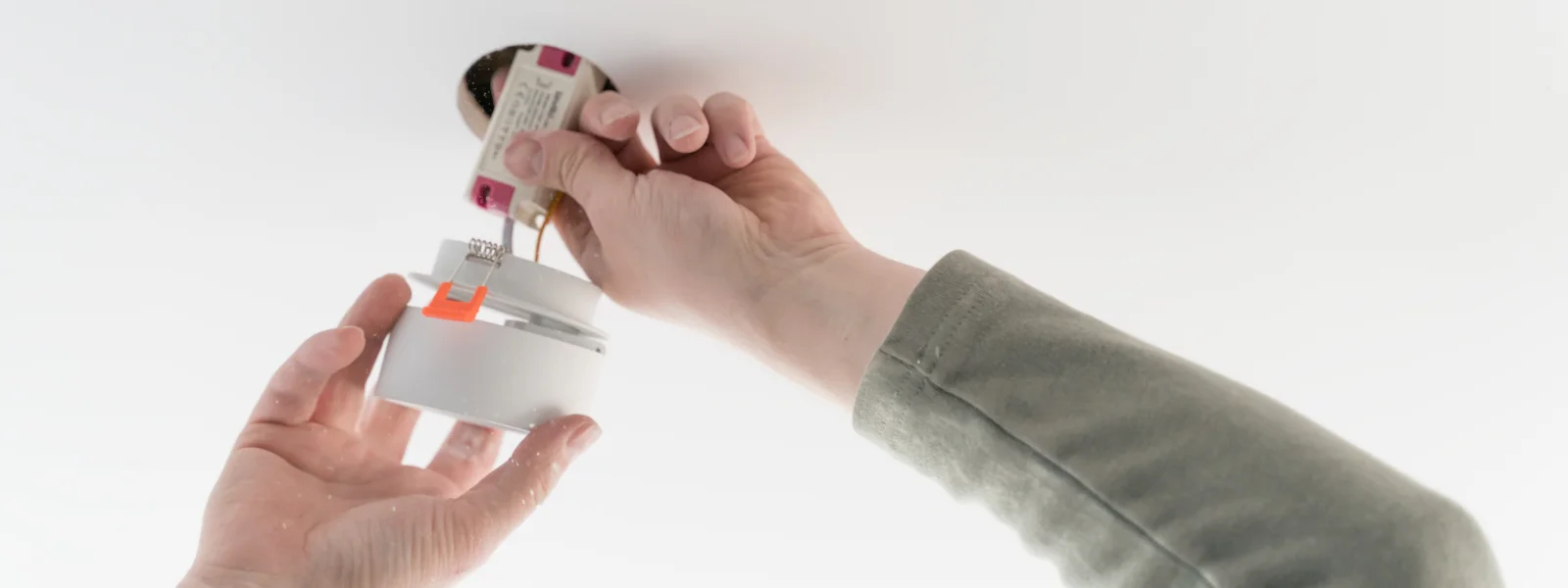
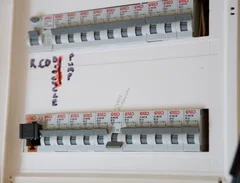 For safety reasons, it is critically important that the power has been turned off at the mains unit before beginning work on your light fitting. Just turning the light switch off is not adequate. Test the light to ensure the power is turned off.
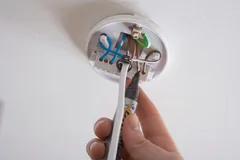 Remove any light bulb(s) from the current fitting and carefully remove the light fitting cover to expose the wiring inside. Mark each wire so they can be replaced in the same position in the new fitting. Taking a quick photo on your phone is another handy option. This will make wiring the new fitting easier.
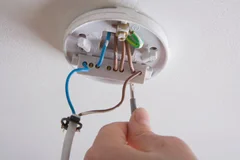 Using an insulated screwdriver (also known as an electrician’s screwdriver), unscrew each of the wires from their terminals.
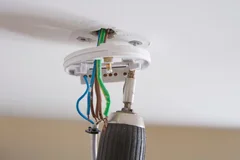 Step 4: Unscrew Mounting Plate
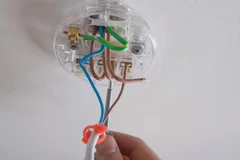 Step 5:. Replace Wiring
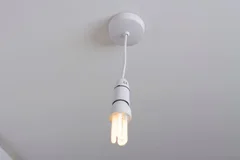 Step 6: Replace the Cover & Fit Bulb